Haus Segerhof
Spiegelgasse 2, 4051 Basel, Basel-Stadt
Text by Leah
Bonvin
Slavery, trade
and the Burckhardt Family
If you walk past the building of the Basler
Cantonal Bank today, there is nothing to suggest that the house that previously
stood there, the Segerhof, housed a company involved in the slave trade.
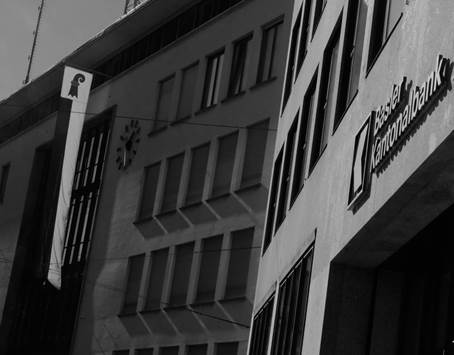
Figure 1 Basler Kantonal Bank. Photo L. Bonvin,
25.10.2022
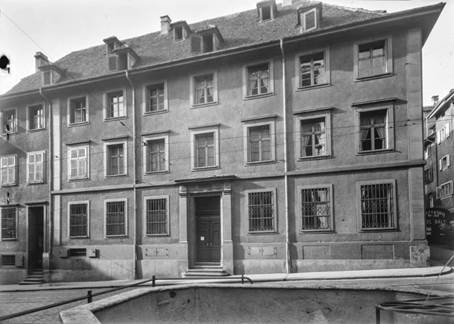
Figure 2 Segerhof old picture
The house was built in 1789 by Christoph
Burkhardt-Merian, son of the textile merchant and Basel notable Christoph
Burckhardt-Vischer. It is in that house that the company Christoph Burckhardt
and Co. was founded and where the company's assets and fortune were managed.
Like his father, Christoph Burckardt-Merian was mainly trading raw cotton,
cloths and dyestuffs used in the production of Indiennes. This type of painted
fabric, originally
produced in India, became very popular in the 17th century. A lot of Swiss
manufacturers started producing imitations of Indiennes, that were then often
exchanged against African slaves in the context of the triangular trade
(swisscollections, Landesmuseum).
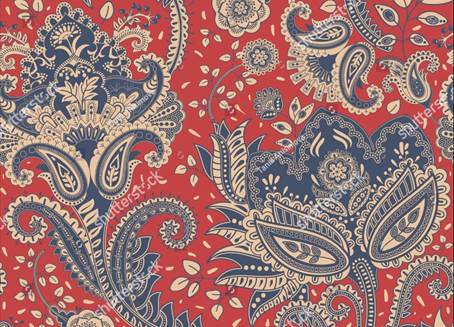
Figure 3 Indiennes
In order to facilitate the imports and exports, the
company invested a great amount of money in merchant ships. In 1790,
Burckhardt’s son established his own company (Bourcard Fils & Cie ) in
Nantes, which allowed the Christoph Burckhardt Co. to be constantly informed
about business opportunities in colonial ports. Even after England had
(officially) banned slave trade in 1808, The Burckhardt family kept paying for
the armament of ships used for the slave trade (Debrunner 1993). According to the
work of historians, the Burckhardt companies in Basel and Nantes participated
in a total of 21 slave trade expeditions between 1783 and 1818. During this
time, approximately 7,350 African slaves were shipped to the Americas
and at least 1100 of them died during the trip (Stettler, Haenger and Labhardt
2004: 63).
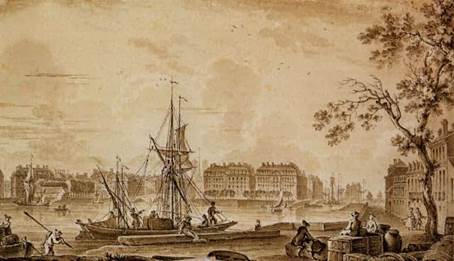
Figure 4 Nantes
Even though the Segerhof has been demolished in 1935 to make room for the
construction of the cantonal bank, this site still allows us to reflect on how
much Basel’s (and Switzerland’s) prosperity owes to colonialism. The fact that
the house has been replaced by a bank is also interesting. In an interview with
the local newspaper Bajour, Veit Arlt of the Center for African Studies
explains that what really benefited the Basel economy was the fact that capital
could circulate across borders and then be reinvested on a local scale. The
textile industry has been made possible by the triangular trade and has in turn
offered Basel a steady economy that helped building the chemical industry as we
know it today (Krüsi 2020).
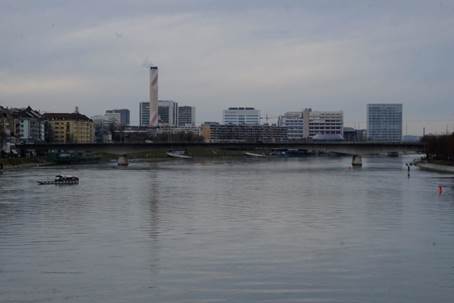
Figure 5 Basel, view on the Rhine. Photo L. Bonvin 25.01.2022
Sources
Basel
Bauten. (2019). Facebook: https://www.facebook.com/BaslerBauten/posts/2201619986557042
Debrunner,
H. (1993). Basel und der Sklavenhandel, Basler
Stadtbuch, 95-101.
Meyer. (2019). Indiennes : material for a thousand stories (Englische Ausgabe). Christoph Merian Verlag.